

BREAKING: Different Cultures Produce Different Values
Democrats' attempts at "Minnesota nice" are breaking America's multicultural project.

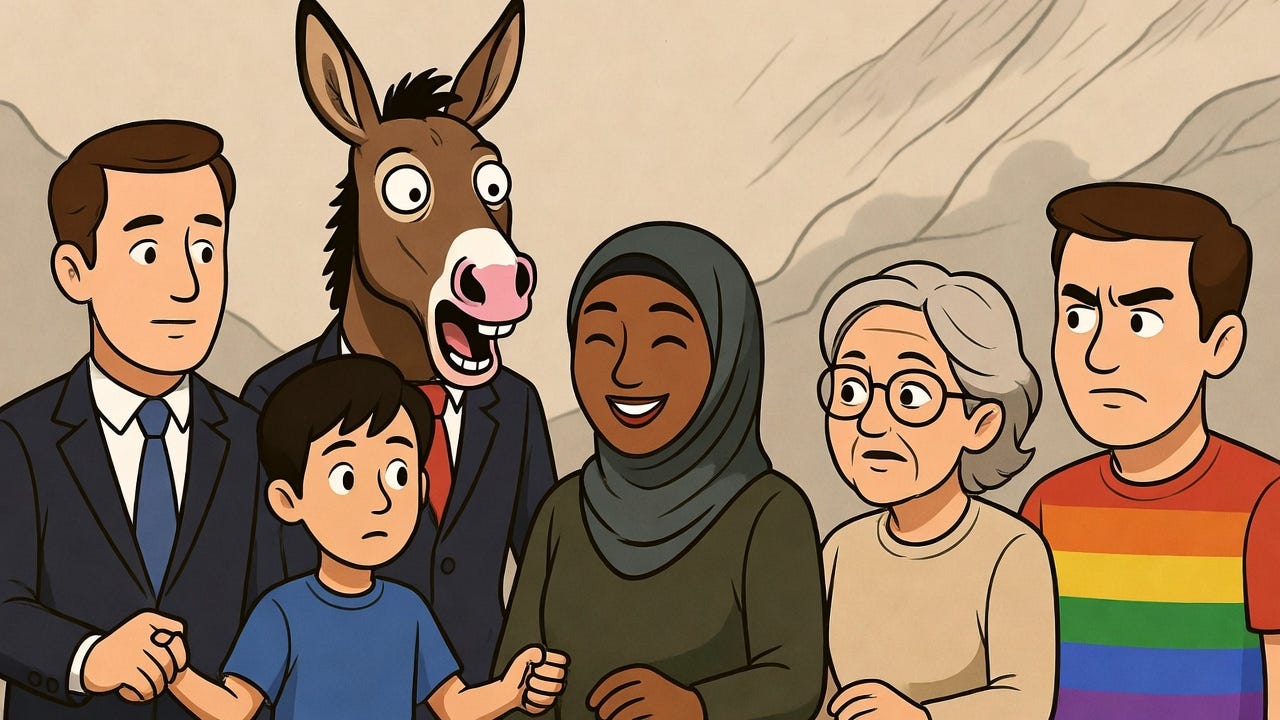
I’m about to engage in some epic lede-burying here, so right up front: this essay is about the fraud allegations in Minnesota. Sort of.
It’s about culture. And about what’s expected of us when we notice different ones clashing.
An increasingly frantic warning about this Minnesota fraud business is that when you mass-invite a population from a country and culture with radically different values to those of the United States, you should expect trouble. I don’t think this is necessarily true, and have greater faith in the promise of multiculturalism than do the harbingers of doom. But that isn’t to say they’re totally wrong.
Different cultures produce not just different behaviors but different underpinnings to those behaviors.
Example:
The Bedouin tribes of the Middle East are famously generous gift-givers. I was warned once by a college professor that, should I ever be invited into a Bedouin tent, I ought to be careful when admiring their wares. Too much ogling could very quickly (and embarrassingly, to a westerner like me) render them my wares.
Why is this? Are Bedouins simply kinder people? Does the spirit of giving just flow more freely through their souls? Or could it be that, as nomads, material items are as much burdens as they are prizes? That an artifact’s value might be greater when given as a token rather than kept to be lugged around?
However we choose to morally assess this practice, it remains a fact: Bedouin sensibilities around gift giving are profoundly different to western ones. They are different because the people possessing those sensibilities are different to western people.
There’s a strange conceit in the developed world that ethical programming operates separately to cultural programming. That yes, we might have different religions and languages and landscapes and customs, but underneath it all, we adhere to the same, shared sense of right and wrong.
This is not true. It is not true at all.
There is no universal subroutine that we all just interpret differently. Different means different. We can be sad, mad, or glad about that fact, but our feelings are irrelevant to its truth. And we need to start expecting this, and being able to discuss it without looking over our shoulders.
Only by forthrightly confronting difference can we save the multicultural experiment, if indeed we want to. If we keep looking the other way, because looking the other way makes us feel better and safer, the whole project is going to collapse right out from under us.
First though, a detour.
A Needless Prologue - In Which I Discuss A Writer I Like
The first author whose body of work I ever just devoured was Michael Crichton. Everything the man ever wrote, I read. Fiction and non. I’d take his books to class, get in trouble for reading them instead of paying attention, then keep reading them anyway.
It’s been interesting revisiting Crichton as an adult. His stories still hold up. His prose maybe isn’t Dickens, his dialogue isn’t the snappiest, and with only a few exceptions, he basically wrote the same book over and over again (happily, it was a good one). But he continues to earn his stature as one of the all-time greats.
Crichton was almost as much a polemicist as he was a novelist. Typically, his books start by zooming us in on a group of powerful people getting something Wrong. In context of the spec fiction for which he was most famous, this was always the mishandling of some scientific advancement.
Jurassic Park/The Lost World: Cloning and manipulation of the natural world.
Sphere/The Andromeda Strain: First contact with extraterrestrial life
The Terminal Man/Next: Human enhancement
Timeline: Time travel
Prey: Nanotechnology
State of Fear: Climate change
We’re then introduced to a character who knows the Right way, and spends the book explaining to everyone else how Wrong they all are. Usually while perilous and deadly events prove the hero Right. These characters were always barely-concealed stand-ins for the author himself; Ian Malcolm (JP), Norman Johnson (Sphere), John Kenner (SoF).
Spotting this formula doesn’t detract from the experience of reading Crichton. You really end up looking forward to these characters’ appearances. Michael Crichton was fundamentally just a curious man who crafted good stories around the subjects that made him curious. Anytime one of these characters shows up, you know you’re about to get some serious knowledge dropped on you. And since interesting people like Michael Crichton tend to have interesting interests, these moments always made for good passages.
Crichton was most famous for his blockbuster stuff, but a genre I wish he’d had written more of was corporate fiction. Disclosure, Airframe, and Rising Sun are, for me, three of his most interesting reads.

In each, Crichton takes a subject that would be kind of dreary on its own - sexual harassment litigation, aeronautical engineering, Japanese business culture - and crafts an intensely fun yarn around it, making the book impossible to put down despite it feeling, at times, like explanatory nonfiction.
The Crichton stand-in in Rising Sun is an LAPD detective named John Connor (no relation to the Skynet foe) who was played in the movie by Sean Connery. Connor serves as the weary, resident expert on the Japanese business world, which forms the backdrop for the murder mystery at the heart of the story.
By today’s standards, the book is wildly racist. So much so that Crichton could never have gotten it published now without serious edits. It was written during a period I’m a little too young to remember fully, but when the takeover of American industry by the more efficient (though less scrupulous) Japanese was considered imminent. Another book published around this time was Clive Cussler’s Dragon. It’s fun, if you’re a Dirk Pitt fan (and really, how could you not be?)
In these stories, the Japanese are presented as something like a race of highly-intelligent, extraterrestrial aliens. Rising Sun is almost an invasion story.
No. It is an invasion story.
It’s equal parts police procedural, guerrilla anthropology textbook, and “resistance is futile” romp. A good chunk of the text is just John Connor explaining to the hapless narrator all the ways in which Japanese people are about to assume control over everything he owns, knows, and might one day buy.
Slightly mitigating what could otherwise be interpreted as raging xenophobia are Connor’s constant admonishments for the main character not to view the Japanese as unethical, but as merely different. Sure, they’ll lie and bribe and cheat and steal to get ahead. But *in Japan*, those aren’t considered vices.
You’re playing your game, they’re playing theirs. It’s just that on their court, the net they’re defending is eight times smaller, yours is eight times wider, they’re allowed to travel, and they can kick you in the nuts anytime you start dribbling.
Connor’s/Crichton’s hedges are funny in retrospect, just for their transparency. “Uh, Mike, you might want to sell some copies of this thing in Japan - maybe toss in a paragraph or two about the differences being okay because they’re cultural?”
But this is really how the world works. And how culture works.
We do not all share the same values or ethical frameworks. It would be a pretty boring planet if we did. What John Connor says about the intersection of culture and morality is spot on. You cannot reliably map the preferences of your group onto the preferences of another.
And that’s really all morals and ethics are: preferences.
Preference Is The Kinder Side Of Judgement
The trouble is that, in the West, we’ve begun to frown on discussing cultural differences without being obsequious, which is very limiting. I understand why this is, of course. I think everyone does. It’s hard to criticize another culture without sounding like a chauvinist. But registering a preference isn’t the same thing as issuing a values judgment.
“I prefer bread to rice.” ≠ “Rice is shit.”
Also, sometimes, values judgments are warranted. If you belong to a culture that does not consider it acceptable to force teenage girls to marry adult men, there’s no reason you shouldn’t be able to just say, “It’s better if teenage girls can’t be forced to marry adult men.”
You should not have to tie yourself in knots by pretending that gifting children to horny men - as some cultures still do - is perfectly “valid.” Especially if that’s not really what you think. Nor should you be required to point to aspects of your own culture that reflect supposedly equal backwardness just to compensate.
I should make something clear here: I’m talking pretty much exclusively to white people. Because white people are really the only people on earth who restrict themselves from forming these judgments automatically.
I promise you, if you have a friend over from Asia or the Middle East, and you’re wearing your shoes in the house - even in your house - they are judging you hard for that. It’s disgusting to them. Tracking the filth of the outdoors across your carpet is like if you started wiping your ass on your sofa upholstery.
They also think it’s weird how often you hug and kiss your family. And why are you and your wife always saying “I love you,” when all you’re doing is going off to the kitchen for another beer? What is that? Like, are you worried you’ll die on the way, and these could be your last words? That level of public affection is considered very strange to many non-western cultures, akin to dropping on all fours and nuzzling someone’s leg like a cat.
I chose these discrepancies to warm us up because nobody really finds it delicate to talk about shoes in the house, or intra-familial PDA. It’s the same reason I took us to Japan before taking us to Somalia.
It Gets Awkward
It’s largely safe to discuss the cutthroat nature of Japanese business without having to walk on eggshells. They aren’t immoral, they’re shrewd. They aren’t greedy, they’re efficient. It being no longer 1992, and Japan having actually not taken over American industry, a focus on cultural distinction here doesn’t read as bigotry. If anything, it reads more like admiration.
Having this discussion about Somalis requires quite a bit more caution. Maybe it shouldn’t, but it does. Our understanding of forces like privilege, history, and socioeconomics inform what we’re willing to say and what we aren’t about the different ways in which folks from Somalia approach money, thrift, and transaction.
It’s a different conversation. A dangerous, maybe even impossible one. Again though, this is very limiting. Inherent to maintaining a multicultural society is that sometimes, we really need to be clear about who’s doing what, and how much of it we think is okay.
If your approach to money and enterprise is not just different from mine but incompatible with mine, one of us has to win. One of our ways has to be identified as the Right way, and the other as the Wrong way. “To each their own” only works when we aren’t sharing space and resources.
And very simply, the existence of cultural deviations that are superior (“Italian food is better than English food”) implies the existence of deviations that are inferior (“Spanish food is worse than any food.”) We tend to be very particular about this depending on context, and in some pretty unhelpful ways. Superlatives are okay in some instances, and cancel-worthy disasters in others.
“Somali dress stylings are so much more beautiful than ours!” ✅
“Somali ethics determining engagement with a generous welfare state are so much worse than ours!” ❌
Honk Honk
Travel is a great way to learn about cultural difference, but (and this is a pretty elitist take, so apologies in advance) it’s also an example of a little knowledge being a dangerous thing.
Your mission trip to Honduras where you “built a schoolhouse” probably did not teach you very much about Hondurans or their lives. It’s good you were exposed to a world different from your own, but you should still be cautious in extrapolating too much from that.
And it’s not even the case that, oh, you just needed to spend a month there, or a year. No, to really get a sense of how deep cultural difference runs, you have to go wide (which, of course, few have the resources to do).
You need to go to Honduras, then Guatemala, then Costa Rica, then Venezuela, (I have been to zero of these places, for the record) if you want to understand the subtle ways in which they are culturally distinct, and cannot just all be folded into some superculture.
Take a really niche example: horn-honking in Southeast Asia.
Vietnamese drivers honk their horns like they’re worried their horns might have stopped working since the last time they honked them, four seconds ago. The Vietnamese street is an endless cacophony, so much so that you stop noticing it very quickly.
In Thailand, if a driver honks their horn at you, you should probably leave the country and consider killing yourself. For a Thai driver to have honked, the offense you committed must have been very grave indeed. You should actually check, because it’s possible you ran over their mother, child, and dog.
Regarding financial transactions, a very common mistake travelers make is assuming that business practices we regard as dishonorable are all functions of poverty. I believed this myself until very recently. How likely you are to be ripped off in a country was, I always thought, tied to that country’s economics.
I was wrong. Economics are nothing. It’s all culture.
An Egyptian merchant will look you dead in the eye, tell you that the piece of shit trinket you were admiring costs 30 times what it actually costs, pocket your money, and not lose one second of sleep over it. Cairene cabbies will tell you that the ride you booked costs 10 times the true fare, and if you don’t want to pay that, you have to yell at them - I mean YELL at them, haggling, in Arabic - and be willing to get out and book another cab if they get stubborn. It can be very uncomfortable for newcomers to that country (which they know, and exploit).
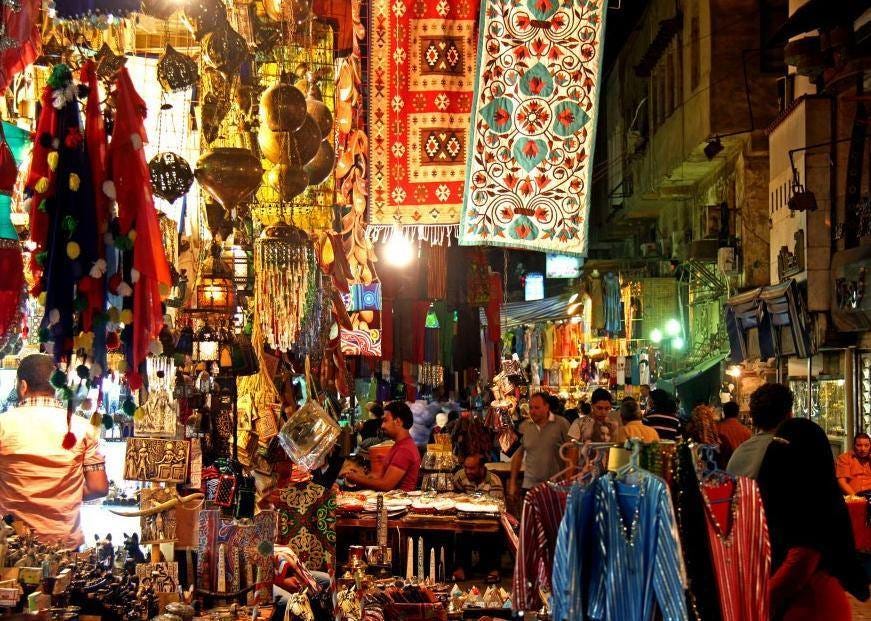
A Thai merchant or cabbie would cut off their nose before doing you dirty. In open markets, the price of a good is the price of a good. Haggling makes them very uncomfortable, and can even be insulting. It implies that they weren’t already treating you fairly, which in almost all cases, they were. Rare is the merchant who could take more money from you than he was owed and be able to live with himself.
These differences exist despite both countries being in the developing world, both containing people who live in poverty unlike anything observable in the West, and both featuring tourist-heavy economies in which scamming people would be both easy and profitable. The difference is that grift of the sort just described is culturally acceptable in one place, and it isn’t in the other. The richest Egyptian will still take you for a ride. The poorest Thai wouldn’t dream of it.
Lefty types like the economics explanation. They think economic differences are fundamentally the fault of those who end up on top. By blaming naked grift on economics, they’re really blaming it on themselves, and they love that. It makes them feel pious, and not like those dreaded chauvinists. We should withdraw our patience for this though. It’s not humble, it’s self-centered. It’s Main Character Syndrome. It’s also just wrong.
And the thing is, you don’t even have to conclude that one way is “better” than the other. Haggling culture can be fun once you get the hang of it, and you can end up with some good deals. You can also earn respect.
An Egyptian merchant who has recognized your worthiness as a sparring partner will admire that. Before long, you’ll be sipping tea in his back room, looking at pictures of his grandkids, getting invited to his family’s home on the Mediterranean, and swapping email addresses that you will use to keep in touch with each other until one of you dies.
Middle Eastern countries that have tried to clean this up - Turkey, Qatar - and limit the aggressiveness of their merchants’ bargaining practices with tourists, have diminished something important in their cultural characters. Who wants to pay sticker price at the Grand Bazaar in Istanbul? Who wants merchants to be wearing uniforms at Souq Waqif?
Somalis In The Melting Pot
We run into problems though when we can’t bring ourselves to observe divergent cultural practices and articulate which ones are a better fit for us. The Egyptian Walmart shopper in Memphis trying to get a better deal on his Kraft Singles probably needs to be told, “We don’t do that here.” And the Somali family falsifying their benefits application in St. Paul to net a larger slice of the public pie needs to be told, “Stop.”
Somali culture is simply not organized the way American culture is, any more than Somalia, the country, is organized comparably to the United States. This produces vastly different ethical manifestations. There isn’t the same compunction in Somalia about abusing public services in ways that benefit the in-group at the expense of everyone else. It should be possible to acknowledge this fact without trashing all Somalis in a racist way or pretending that the behavior is hunky-dory stateside.
Let’s try out some non-Somali examples:
Say there’s a charter school in my district that reliably outperforms the public schools. If I fight like hell to get my kid enrolled, knowing that he’s taking a spot that could go to another more-academically deserving kid, did I do something wrong? Assuming I followed the rules and didn’t lie or cheat, most would say no (except maybe for some far-left collectivists). We have rules, I played by them, I won. Simple as that.
Another one:
I worked hard to be able to afford a large house with lots of bedrooms. Am I obligated to allow 18 of my cousins to lodge in those rooms just because I have the space and they don’t? Very few Americans would say so, but a Somali would probably say that yes, I am. He would regard my hoarding that space for myself as wasteful and rapacious. I have the ability to help my people, my tribe, and I’m not doing that? What kind of morality am I practicing?
Think of in-group favoritism in terms of concentric rings. Americans tend to jump from the innermost ring: their immediate, nuclear family, to a far outer ring: their country. Our loyalties skip a lot of layers. We’ll die for our families, and we’ll die for our country. We probably won’t die for our state, our third cousin’s mother’s aunt, or for some random guy who just lives on the next street.
For Somalis, the outer rings hardly factor in at all, while many more inner rings do. A Somali showing more loyalty to Minnesota than to his clan, even to members of the clan unknown to him, would be like a draft dodger. He wouldn’t just be immoral, he would be treacherous.
So if along comes this opportunity to extract massive, unimaginable wealth from some nebulous entity to which he owes nothing, and give it to people to whom he owes everything, how is he not going to do that?
The short answer: he’s not going to do it if we don’t let him. If we make sure he can’t.
We don’t need to condemn him as evil. We don’t need to say that everyone like him needs to go home. We certainly don’t need to liquidate all that wealth because somebody like him might take advantage.
But we really do need to be clear about what’s likely to happen if he’s given the opportunity to help his people at the expense of ours. We need to be honest about how his cultural sensibilities might influence his behavior, and we can’t be squeamish about telling him he needs to bottle them up if he wants to live among people who don’t share them.
And finally, uncomfortable though it makes us, we need to encourage him to see our people as his people too. That’s the social contract. Our social contract. If he can’t live by it, he simply has to live somewhere else.
Cons To The Rescue
This Minnesota fraud saga is a weird example of a situation where conservatives are doing a better job safeguarding liberal priorities than liberals. The contemporary left is clinging desperately to the fiction of blank slatism, and tends to become very uncomfortable when made to notice group traits, especially those that are difficult to celebrate.
This is why, when you point out to them something like, “Somali immigrants are committing fraud,” their first instinct is not to say, “Yikes, what a bad look, we should put a stop to that.”
Much more likely, they’re going to do what Minnesota Governor Tim Walz did, and complain that actually, white people commit fraud too. More of it even! (White people are a perennial exception to the prohibition against making negative group generalizations.)
This is insanely counterproductive. I know what liberals think they’re doing; they think they’re shielding these groups from blowback. They aren’t though, they’re doing the opposite. They’re ensuring blowback.
One of the core tenets of American ethics is individual responsibility. I don’t mean that in a “pull-yourself-up-by-the-bootstraps” sense, I mean it much more generally: you do what you do, and are only held accountable for your own marks on the ledger. If your father commits a crime, you aren’t made to share a cell with him.
By running cover for the Somali community, Democrats are effectively excusing them from their obligation to participate in the American system. Because nobody else gets this treatment. Certainly not - as Walz aptly demonstrated - America’s white plurality. Nobody else is preemptively assumed by the governors of states against which they have committed crimes to be probably not responsible for them, and nobody else gets to command the wagons to instantly circle around them.
Democrats in Minnesota - starting with Walz- really, honestly seem to think it’s a bigger problem that people noticed that Somalis were committing fraud at disproportionate rates than that…Somalis were committing fraud at disproportionate rates. And nothing could be worse for the Somali community, especially its innocent members.
By demanding accountability, conservatives are doing Minnesotans of all cultural backgrounds a massive favor. They’re establishing a framework to which everyone can adhere, even if it’s not the framework from which everyone emerged. They’re acknowledging different cultures while insisting that a higher ideal be respected.
And that frankness is what will save multiculturalism, even if they don’t mean for it to.
I don't think you're going far enough on the mitigation of the dark side of multiculturalism. The only way America can healthily sustain high levels of immigration are to either only allow immigration from culturally similar/complementary like Western Europe or Japan/South Korea, or to insist upon assimilation on thick cultural dimensions (e.g. civics and ethics, vs. thin cultural dimensions like food and dress that don't really matter). Europe's failure to do this is costing them dearly, we've been insulated since our geographically natural migrant population (Latin Americans) is very culturally similar to Americans, but there are plenty of people a plane ride away who would love to come here for economic and safety reasons but have no real interest in becoming Americans if that means adopting what is a fundamentally historically Anglo-Protestant civic ethos. So as a country we need to either not let them come, or preferably let them come but insist on assimilation into the deep culture of American civic life.
Another example of this is the western imposition of democracy in africa. you can't take cultures that have been built on chiefdoms and patronage systems for thousands of years and expect that they won't continue. so now you have countries with elections and parliaments, but resources are still often distributed along clan lines.