

The Backlash Will Be Ugly
Outcries over crime used to be rare, and mostly regional. Now they’re daily, and global.

Full version of the audio is below the paywall.
We’re beginning to see a major consequence of online censorship, particularly as it regards crime, and race, and it should alarm us.
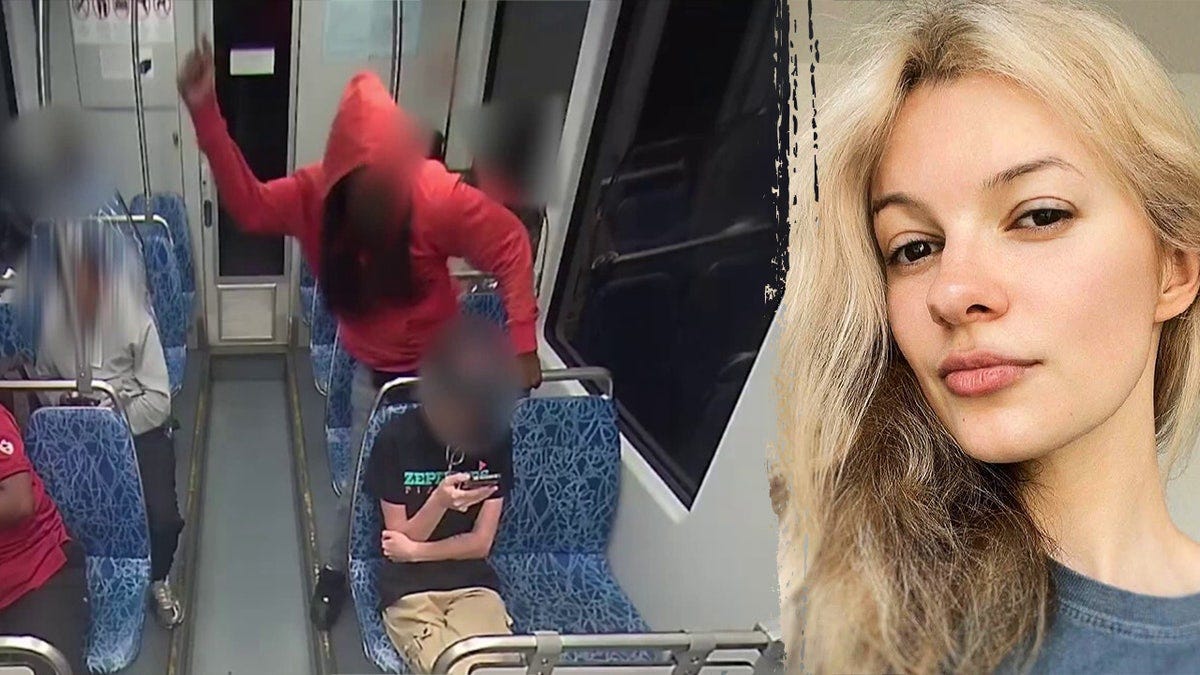
Both Decarlos Brown and Antoine Watson are back in the news. Brown, who was responsible for the infamous, on-camera murder of Iryna Zarutska, has been found not competent to stand trial (he still faces federal charges). This, after a well-documented history of poor mental health that did not result in his disqualification from trial for a dozen plus prior arrests.
Watson is trending again after San Francisco judge Linda Colfax decided to reduce his manslaughter sentence to probation after time served. He first first went viral in 2023, due to the surprisingly light knuckle rapping he was handed after his savage, lethal assault against 84-year-old Vicha Ratanapakdee was also caught on camera.
The clip can be seen here, but fair warning, it’s extremely upsetting:
The Brown and Watson decisions have reignited a nationwide controversy over judicial accountability in the face of violent, repeat offending. Decarlos Brown has been mentally ill for years, which didn’t stop him facing several convictions, some for violence, and several releases back into the community. The rationale Judge Colfax deployed was that Antoine Watson was a traumatized and mentally ill young man for whom prison would be very difficult.
I must say, I have a difficult time accessing much sympathy for Watson’s prison plight, and it wasn’t my grandfather I watched him randomly decide to slaughter. Brown was competent enough to navigate public transit, competent enough to find an empty seat behind Zarutska, competent enough to have his weapon concealed, and competent enough to take her fully by surprise. He was competent to churn through the court system 14 times, and to understand what was happening to him then. Just not that 15th time, after he’d done something really bad.
Something about this system is not working.
We’re heading for a very bad place, I fear. Frustration over decisions like these, and over the perceived prevalence of random, horrifying incidents of violence is building. Maybe even boiling. And I’m not sure the backlash won’t be its own kind of frightening.
I’m also not sure we couldn’t be better managing this, from a policy perspective, through simple adherence to basic, liberal (small-L) principles about speech and information access.
The Bad Old Days
Old Twitter had kind of a bizarre set of rules, and was just as likely to censor and punish malinformation as mis or disinformation. Quick refresher on the differences, which I remember by first letter:
Disinformation → d → deliberate
Misinformation → m → mistake
That first category though, malinformation, is information that is true, but likely to cause a negative outcome. In the context of Old Twitter, this might have been something like one of the above racially charged crimes, especially if it was deemed a threat to stir up resentment against a supposedly vulnerable group.
Malinformation is one of those concepts you can consider for a split second and think, “ah okay, that makes sense.” You can kind of imagine what content would be likely to have an ugly impact, what sort of reaction there could be to it going viral, and why a person might want it removed from the algorithm before it causes a riot or something.
But then you consider it for the whole second and think…hold up.
Why on earth would we agree to allow our flow of factually correct information to be throttled for us, on the grounds that some person thought some other person might react badly to learning it?
To whom are we entrusting this responsibility to decide what we can and can’t know? Presumably they get to know it. Why not us? And how can we be sure that they share our interests, or won’t abuse this power?
Returning to the above examples, information about racialized crime and violence was governed by pretty unusual guidelines. In some cases, it was allowed to go megaviral, despite its direct contribution to real world social unrest. In other cases, it was quickly scrubbed from social media, and its sharers met with sanction.
I don’t think I need to outline what specific factors determined this.
One Nation, Two Standards
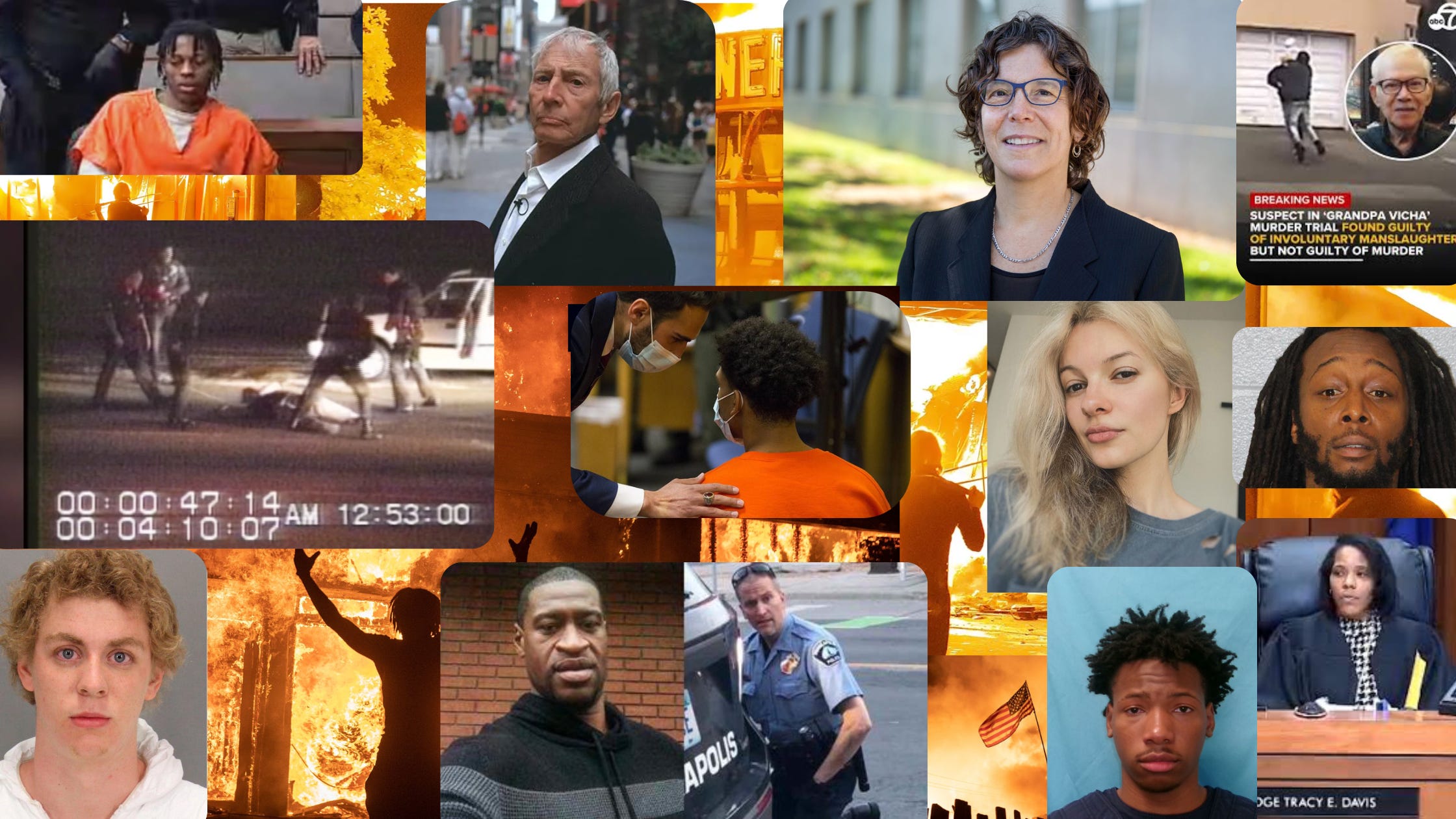
Reliably, it came down to the identity of the perpetrator vs. the identity of the victim. If the bad guy was in a “privileged” class (white, wealthy, a cop; Brock Turner, Robert Durst, Derek Chauvin) content regarding it was allowed to flourish. If the bad guy was in a “marginalized” class (anyone else, including the two above), it was a very different story.
It wasn’t just that you couldn’t share some videos but could share others, the double standard ran deeper than that. It was absolutely impermissible to draw any kind of narrative conclusions about crime committed by the marginalized (except perhaps that it was society’s fault, actually, for failing them). Meanwhile, it was a requirement to draw the correct narrative conclusions about the crimes of the privileged.
Brock Turner became an emblem of the unsung prevalence of sexual violence against women, particularly on college campuses. His assault’s infamy led people believe to take as unquestioned gospel statistics that, if true, would mean that campus life is as dangerous for young women as life in war zones and refugee camps.
Durst was a cautionary tale about the ease with which money and privilege can help you dodge accountability (I have no real complaints with this narrative, I’m only pointing out that it was a near-universal reaction, and “I don’t know, he seems okay to me,” would not have been an okay thing to say in the aftermath of everyone watching The Jinx.).
And of course, Derek Chauvin was not just a cop, and not just a bad cop. He was cops. He was The Man. He was what life is like for minority Americans.
This contradictory standard for when a lesson must be learned vs. when no lesson must be learned; when a pattern must be recognized vs. when it must be denied, has not been good for the western body politic. Combine that with an increasingly fervent committed to so-called restorative justice (for some), and you’re filling up a powder keg.
Superlatives are tough with crime, so I’m wary of trying to identify the “most egregious” case of this, but a sure contender is the recent, explosive decision by Louisville judge Tracy Davis to ignore a jury’s recommendation of a 65 year prison sentence for Christopher Thompson, and instead chop that sentence in half. 30 years is still a pretty harsh length of time to be locked in a cage, but this one arguably tops the charts for three reasons:
Thompson’s crime was truly disgusting in its evil. He abducted a young woman, forced her to perform oral sex on him at gunpoint in a school parking lot, drove her to an ATM so she could empty her bank account for him, then drove her back to the scene of the original crime and sodomized her.
Thompson’s courtroom behavior betrayed, shall we say, a notable paucity of remorse. Some of his many utterances to Judge Davis:
“I ain’t doing nothing. Eat my dick.”
“If I could spit on you, I would.”
“I don’t have sympathy for nobody. I don’t have sympathy for you, the victim, the victim’s family, I don’t care. Boo hoo.”
If this all weren’t unpleasant enough, Judge Davis was explicit in her ruling: Thompson deserved the break she was giving him because he is black. “Unfortunately, he fell through the cracks,” is what she said.
The homeless have “fallen through the cracks.” Many addicts have “fallen through the cracks.” People who make too much money for Medicaid but not enough to afford insurance have “fallen through the cracks.”
I submit to Judge Tracy Davis, who is also black, that however strong her feelings on the messy and complicated history of race in the United States, a man who holds a gun on somebody, solicits a blow job, then robs and sodomizes them, has fallen a bit lower than just “through the cracks.”
The Summer Of Floyd
If Christopher Thompson’s case is the most shocking example of this phenomenon at work, George Floyd’s death in Minneapolis was the loudest. It was also a turning point, though not perhaps in the direction one might expect. It was after Floyd’s death that the double standard I’m describing became much more pronounced. And when it bled heavily from social media onto legacy media.
Viewing estimates for the video of Officer Derek Chauvin kneeling on Floyd’s neck until he died are in the billions. It became one of the most viral pieces of content in internet history.
That fact stands in stark contrast though to subsequent content raising awareness of Floyd’s extensive criminal history. The latter would often result in the same platforms that were channeling the virality of the former issuing suspensions, removals, shadowbans, or reduced visibility.
We were allowed to watch a police officer hurting George Floyd. We weren’t even allowed to know about George Floyd hurting random innocents.
A lot of that content leaked out anyway, and so far as I know, did not cause a single episode of actual social unrest. Contrast that with the original Floyd video, which led to rioting on a nationwide scale, billions in property damage, hundreds of arrests, and several deaths.
It might have been difficult, after that, to continue pretending that the speech suppression guidelines in use were motivated by their stated purpose: protecting the peace. After all, we now had some narrative-challenging data. Yet after Floyd, legacy media became much more careful to slant their race and crime stories, and in the very same direction:
A Washington Free Beacon review of hundreds of articles published by major papers over a span of two years finds that papers downplay the race of non-white offenders, mentioning their race much later in articles than they do for white offenders. These papers are also three to four times more likely to mention an offender's race at all if he is white, a disparity that grew in the wake of George Floyd's death in 2020 and the protests that followed.
This despite one direction of slant leading to the feared outcomes - racial strife, violence, and unrest - and the other not leading to that with anything like the same reliability.
We tried hot dogs and we tried hamburgers. The hot dogs gave us indigestion, the hamburgers didn’t. We banned the hamburgers and carried on with the hot dogs. Profoundly strange behavior.
