

Victim Blaming Is A Misplaced Concern
Outside its original, narrow context, this was never something we should have been avoiding.

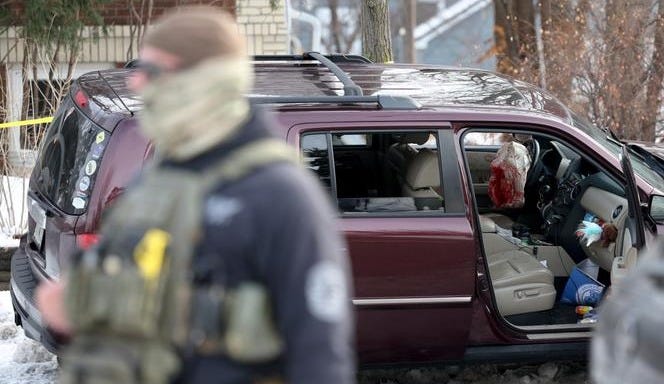
A wave of distressing social unrest is once again sweeping the nation. The shooting of Renee Nicole Good by an ICE agent in Minneapolis has become a cultural and political flashpoint. It’s rallied the left in angry opposition to the Trump administration’s crackdown on illegal immigration, while hardening the determination of the right in supporting it.
The situation echoes the aftermath of the 2020 death of George Floyd in the same city. That event led to more than 500 riots nationwide, billions in property damage, thousands of injuries, tens of thousands of arrests, and as many as 25 dead. If we can agree that a repeat of that outcome would be suboptimal, it should worry us a great deal that parsing what led to Good’s tragic killing has been rendered so difficult.
Our trouble is being caused by overcommitment to a useful idea, though one that has mission-crept its way into becoming a profound rhetorical hurdle, and a serious threat to restoring peace: the concept of “victim blaming.”
Original Context & Justifications
Victim blaming used to be something to really worry about. If a woman is sexually assaulted, it is inappropriate, offensive, and foolish to ask, “But what was she wearing?” There are several reasons why this is so.
It’s inappropriate, because it suggests that the responsibility for a serious crime having been committed rests with its victim and not its perpetrator. That’s wrong. Crime is a choice made by the criminal, and the blame for it rests first and foremost with them. The only reason for attaching a “first and foremost” modifier at all is that we should probably agree - sometimes, for some crimes - that external factors may have contributed.
If my child is sick, and I’m too poor to afford the medicine, I might steal it. If somebody hurts my child, I might hurt them. If I’m not of sound mind, I might do any number of things without recognizing their wrongness. In those cases, financial circumstance, parental instinct, and insanity might be said to have helped cause my actions, arguably removing some of my moral culpability.
That said though, for every parent of a sick child who becomes a thief, another doesn’t. For every vigilante, there’s a guy who called the cops instead. Most mentally ill people do not commit crimes.
“What was she wearing?” is offensive, because it seeks to police women’s fashion choices via the threat of sexual violence. Which is an epic cheap shot. Women are judged for their appearances when they haven’t been assaulted. If the thing you warned incessantly about doesn’t happen 1,000 times, does happen 1 time, and you say, “See? I told you so,” you’re not prescient, you’re a douchebag.
But interrogating a sexual assault victim’s garment choices is, more than anything, foolish. It implies that predators identify their victims by measuring skirt length, which is just not how these people operate. Predators select for vulnerability, opportunity, and/or ease of manipulation. Not lipstick shade. To claim otherwise risks terrorizing women who just want to look attractive, while instilling a false sense of security in those who decide that sweats and a hoodie are as dolled up as they needed to get today.
So it was with good reason that, led by feminists of the 2nd wave, we began taking a very dim view of responses to sexual assault that felt reminiscent of “What were you wearing?” Such reactions were “victim blaming,” and they were no longer okay.
Up to here, we’re on firm ground. Victim blaming in this context was extremely common, and a genuinely harmful practice. Our attempts to harshly curb the behavior were both justified and overdue. But the idea broke its pen.
A practical framework was mistaken for a moral one. “Don’t blame victims in this situation” grew into “Don’t blame victims in any situation,” and that sent the idea boomeranging straight back into our faces.
In Defense Of Victim Blaming
Say I live in a rough neighborhood. Property crime is common, streets are poorly lit, and policing is unreliable. Coming home from work one night, I decide I’m due a bit of fresh air, so instead of parking in my driveway, I park around the corner from my house and walk it. On the way, I’m mugged. When I reach my car the next morning, the windows are smashed and the radio is gone.
I didn’t break my windows. I didn’t steal my radio, and I certainly didn’t mug myself. If the assailants and thieves are ever caught, it is they who will face charges. They will stand trial, and they will serve whatever sentence is handed down. I will join them in neither the police car, the dock, nor the cell.
Which means that what happened wasn’t my fault, right?
To any sane person - and I do mean any sane person - the answer is “No, you complete fucking moron, of course it was partly your fault.” Perhaps that isn’t a kind or ethical answer, but it is an absolutely true one.
I knew where I lived. I knew what the neighborhood was like. I knew the hazards. In spite of all that, I chose to take unnecessary and dangerous action. I didn’t need to, but I chose to park around the corner. I chose to walk home alone. I chose to eschew the safety of my driveway for the jeopardy of the street. And I paid for it.
Choices have consequences. Those two things operate in conjunction with each other, not as independent forces. Should I be able to walk home from around the corner unmolested? Of course I should! I have every right to behave as I did. It wasn’t illegal and it wasn’t immoral. It was just stupid. Benign intention was not going to protect me from the perils of the universe, and I had no excuse for not knowing that.
Maybe I only hopped into the tiger enclosure to pet the big kitty, and give him a treat. Still probably should have stayed out.
Mission Creep
It’s a much less comfortable conversation, but even back in the context of sexual violence, there are plenty of ways in which the behavior of potential victims influences whether or not they become actual victims. Dress sense happens not to be one of them, but drug or alcohol intoxication is strongly correlated with sexual assault, on the victim side as well as the perpetrator side.
On a college campus, for example, avoiding drug and alcohol use - better yet, avoiding even situations in which drug and alcohol use are taking place - is perhaps the safest single thing a young woman can do to avoid becoming victimized by this crime type.
Should young women have to avoid these situations? No! Should they have to live like nuns, just to dodge creeps and monsters? Hell no! Is it even remotely fair that this is a thing; that co-eds have to price in the risk of being raped to engaging in perfectly ordinary experimentations with partying and fraternizing? Hell to the motherfucking no.
Should they at least know the risks? Even if that means confronting some very uncomfortable truths about men and society? Yeah. They should. And they don’t always, because our understandable distaste for blaming crime on its victims has morphed into something sinister and retarded. It’s become an intentional severing of the relationship between cause and possible effect.
Doesn’t matter that you hopped into the tiger enclosure, it was the tiger’s job not to eat you. TEACH TIGERS NOT TO EAT!
Madness
I will never forget watching the 2019 debates in Sydney, Australia between The War Against Boys author Christina Hoff Sommers and Bad Feminist author Roxane Gay. They met during an event called This Is 42, and what transpired was actually quite radicalizing.
The whole thing was a shitshow. In 2019, we were well up the on-ramp to peak woke, and guilt by association was all the rage. Sommers ran in some spicy circles then, and had appeared onstage with provocateurs like Milo Yiannopoulos. That was apparently cause for Gay to fear that her fans might punish her if she spent even one second of the debate series failing to behave disrespectfully toward Sommers, or forgetting to act like a surly dick.
She called Sommers “white supremacist adjacent” for having appeared with Yiannopoulos, and pretended not to have known who Sommers even was, implying that she had basically accepted the This Is 42 invitation by mistake.
Because sure. Roxane Gay was so unfathomably famous and sought-after that she just randomly boarded a flight to Australia to participate in multi-day debate series with a person she’d never heard of. Totally normal and believable behavior. I guess she didn’t have…Google?
At around the 1:02:00 mark in the video, Sommers references a peer reviewed study that found that even minimal educational interventions explaining to young women the risks associated with binge drinking reduce instances of sexual violence substantially. She can’t even finish her sentence.
The audience - in the tank for Gay from the jump - boos and hisses, jeering her until she’s forced to stop talking. At which point Gay, rolling her eyes and shaking her head, goes for the lowest hanging fruit: “Surely we could have a class that shows young men not to victimize.” The crowd goes wild.
You really must watch the exchange for yourself. It has to be seen to be fully understood.
Remember, this was a period when the specter of campus sexual violence was at the forefront of the conversation about social justice and #metoo. Immediately preceding this was a back and forth between Gay and Sommers about whether the oft-cited 1 in 4 statistic for sexual assault on campus reflected reality, or whether it depended on an unreasonably wide expansion of the definition of “sexual assault.” I’ll leave it to viewers to decide which.
Either way though, Sommers was the only one to bring anything like a material or actionable idea for mitigating the scourge. And the folks in the audience - the one most animated about it - wanted none of it. It was victim blaming. Of the worst sort.
I said that video was radicalizing, but now that I’m thinking of it, I’d probably been on a slow boil for some time.
The first social justice mobbing I ever experienced was in the comment threads of a Raw Story article about (I think) how the marketing of self defense classes to women was problematic, on the same grounds that declared alcohol education off-limits.
I worked in government then, and didn’t do much political writing because I wasn’t allowed to. I had a pseudonymous account though, and the article had bothered me with its hectoring tone, so I crafted what I thought was a perfectly reasonable rebuttal: personal safety and responsibility were not examples of victim blaming, and it could actually be dangerous to suggest otherwise. I replied with my short missive to the author, and went out to lunch, satisfied I had made a valuable contribution to the discourse with which nobody could possibly take issue.
When I returned to my office, I logged back in…

My thoughts had, shall we say, not been well received. I danced my first dance with the wokesters that day.
There’s another reason this subject gets under my skin though, and it’s a personal one. My daughter is the sweetest, most innocent creature to have ever been placed on this earth. She has lived in exclusively safe locales, and despite my and her mother’s best efforts, she is neither streetwise nor world-weary.
On vacation in Europe once, she was almost pick-pocketed, and the experience scandalized her. She couldn’t get over it. The outrage! Who would do something like that?
Oh, my sweet, summer child.
When she goes to college - not far off - it utterly terrifies me that she could end up in an environment where people are lying to her about the relationship between the choices she might make and the actions that might follow. I’m not going to be there. I won’t be around to have her back. I need to be able to count on The Sisterhood to pick up some of that slack, and because of these not-yet-dead precepts, they aren’t ready to do that.
George Floyd & Renee Good
Fast forward to Minneapolis. We’ve calmed down a bit in our discussions about campus safety, but the “victim blamer” accusation still haunts our public conversations. When it jumped from being a practical concern to a moral one, it began infecting everything.
Consider George Floyd. Before Derek Chauvin knelt on his neck, Floyd was suspected of having paid for cigarettes with a counterfeit $20 bill. When approached by police, he physically resisted. According to the rules of discourse operative at that time though, neither resisting arrest, nor spending counterfeit bills was a capital offense, ergo, discussion of those acts was immaterial to discussion over Floyd’s death. That causal relationship had to be considered severed. Nonexistent even.
To point out that, had George Floyd just managed to get through that day without committing a crime, or resisting his arrest for one, he would still be alive, was to risk - no, it was to guarantee - reputational ruin. You could not talk about that. It was outside the Overton Window.
What I have said, many times, is that based on my many viewings, from many angles, of the shooting of Renee Nicole Good, the ICE agent that took her life absolutely did not have to. He was not made safer by having shot her, whether or not the shooting could technically be described as self defense.
Although. Although although although…
It is also my view (because it’s fucking true) that had Good not been recklessly obstructing armed officers with an SUV, and had she not recklessly accelerated in the direction of one of them rather than comply with demands to alight her vehicle, she too would be alive.
And this is not an academic concern.
There are, at this moment, many thousands of activists on the streets of urban America, eagerly recreating the behaviors that got Renee Good killed. They are wound up, pissed off, fat on a diet of righteous outrage, and so allergic to “victim blaming” that they can’t stomach so much as one, side-dish lesson about how fucking with cops is going to get them fucked with.
Right vs. Left
Fear of victim blaming has poisoned our entire national exchange about this tragedy. And it’s going to get more people hurt if we can’t overcome it. Two things are true: Renee Good should not have been shot, and Renee Good should not have been doing the things that led to her being shot.
The number who can bring themselves to acknowledge that simple yes, but seems painfully small. Instead, people are being pushed to the extremes.
On the right, the reasons why strike me as pretty straightforward. Conservatives take what I call an impatiently practical approach to these matters: don’t want the tiger to eat you? Stay out of the fucking tiger enclosure. It’s that simple. And it’s kind of hard to fault their logic.
The left mocks this idea, but test it sometime. (Mentally, please!) Make a list of every act of police violence - lethal or non - that you can remember, then strike from that list any situation in which the victim was refusing to comply with orders. If you did it right, your mountain just became a molehill.
You are vanishingly unlikely to be harmed by a police officer if you simply do what they tell you to do, even if you don’t think it’s fair. The people accusing ICE of “cold blooded murder” are acting like Renee Good was on the sidewalk playing hopscotch when an armed goon walked over and put three in her head. That is not what happened.
Civilian interactions with American police are so reliably non-lethal that were we to accept the right’s premise here, and simply throw up our hands every time one goes bad after a failure to follow instructions - if we regarded that precursor as making the outcome “not our problem,” we would not consider this an issue worthy of discussion. We wouldn’t think of it terms of needed policy fixes, or glaring societal injustices, any more than we currently do when some yahoo tries to go snuggle the orange, stripey zoo kitty and gets munched.
This is all to say that the right’s rigidity on this is, I suspect, genuine. They are out of patience. It isn’t that they fear exhibiting a more moderate reaction, it’s that moderation has fled their hearts in this area.
The left is a different story.
I suspect many leftists are in private agreement with me that, while Good’s shooting wasn’t necessary, neither was Good conducting herself wisely or safely. Their hearts are with her, and they despise her killer(s), but they know the truth: she’d be home with her wife and kid right now if she’d stuck to waving signs.
But they can’t say that, even if they know it. There’s no rhetorical space for them except on the extremes, because even the smallest suggestion that Good might have precipitated the violence that claimed her life is yet another tired appearance of that old chestnut: “victim blaming.”
So the truth, in this case, is immoral.
A great article -- thanks! I want to push back on one piece (and not the crux of this, but you sparked a thought). The older I get, the less sure I am that even taking into account what a woman is wearing during an assault is *entirely* wrong. I am not -- NOT -- saying that there's any kind of outfit that warrants assault. Nothing *warrants* assault. But we all advertise certain things about ourselves, whether knowingly or not, by what we wear. If a woman dresses in a way that advertises availability, people will think she's available. And if they think she's available but then find out that she isn't, a small subset of them might feel tricked. Of those who feel tricked, an even smaller subset might get angry. And if there's a tiny subset of men who feel tricked and angry by this woman's "false advertising," there might, *might* be one among them who was always morally/psychologically capable of assault, given the right circumstances.
I want to be really, explicitly clear here. I am *not* saying a woman wearing a dress or a miniskirt or a bikini or a low-cut shirt or whatever else we might be talking about is asking for assault. But let's be real: she *is* asking for attention. Assuming she's young (as the majority of victims are), she probably doesn't understand that, while she has a say in what she wears, she doesn't have a say in who is giving her attention. She can't wear a sexy outfit so that the guy in her algebra class will look her way but then balk when the nerdy guy in her theater class tries to talk to her (a real scenario, and the guy in my algebra class didn't even look at me, after all that!). The girls who are right now wearing tiny tiny shorts and extra-extra-large sweatshirts (so that all we see are bare legs without the slightest hindrance) in the hopes of getting the cute guy's attention will one day become adults who will look back and realize that they were getting *everyone's* attention -- even from the guys (or men) whose attention they didn't want. Even if nothing bad ever happens to them, it's still an uncomfortable truth to swallow.
I'm also not throwing all men under the bus as nothing but "potential rapists" or "future rapists," or whatever the hell people call them. I've interacted with tens of thousands of men, if not more, in my lifetime, and the vast majority of those interactions have been either pleasant or too short to have any lasting effect. Of the remainder, they all backed off once I gave them attitude. I have never in my life encountered a man who was truly dangerous and not able or willing to hold himself back. But we need to be real here too: men (especially young men) are more visually stimulated, more overtly sexual, *and more dangerous* than young women. I don't want to police women's outfits (not counting my daughters', whose outfits I absolutely police), but I also don't want to send young women out into the world without understanding that what they wear really does send messages to people.
Again, not the point of this great article, but it's something that's been swirling around my mind for the last decade or so, and this re-sparked it. I'd be interested to see what others think.
If you think it was verboten to suggest George Floyd was an active participant in his demise, try suggesting that he wasn’t murdered at all but actually died of a fentanyl overdose.